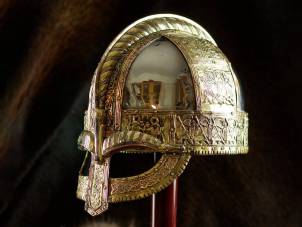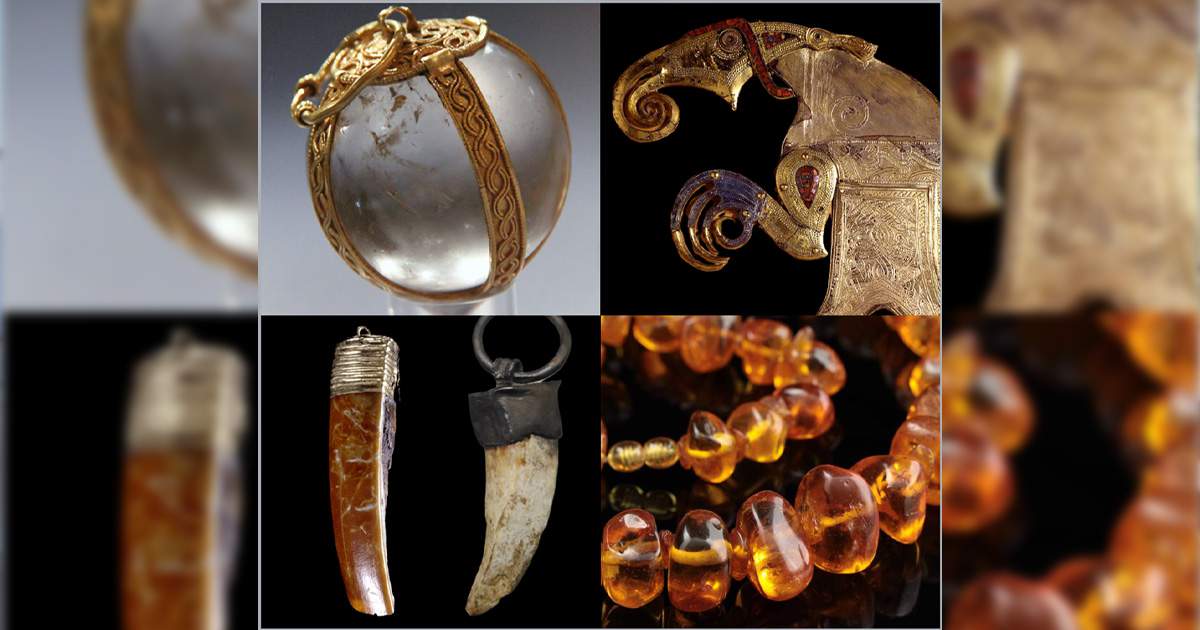
The medieval definition of the world did not exclude the supernatural nor see itself in contrast with it. The unseen, the strange, and the unearthly were integral as an understood part of reality and were represented as such in poetry, medical texts, and material culture. But this was no mere “Dark Age” superstition. The application of animism (the attribution of intentions and desires to natural phenomena) was a strategy for understanding and predicting nature; it subsequently allowed people to understand and predict the behavior of their fellow humans. This in turn enabled a belief in a reality with invisible agents only accessible, understandable, and controllable through religious or magical means. One of the most prevalent methods of control was through amulets – protective items carried on the body. A vast range of protective adornment was put in contact with bodies in the early medieval period, from amber to crystal balls, from animal parts to predator imagery applied to arms and armament.
In this lecture, we will explore the principle of totem ex parte (a part of an animal can stand for the whole). Understood before Antiquity, this idea may have inspired beliefs in the physical absorption of the perceived bodily traits of wild animals through their parts, or their protective qualities through their image. Men, women, and children were buried with animal fangs or raptor claws; swords were imbued with snake venom both during the smelting process and to finished blades; and helms were decorated with dragons over the most vulnerable areas of the skull. We will also consider the position of the “wise woman.” This role may have been bestowed upon or affected by women with knowledge of benefits of plants and minerals, who knew how to prevent or counteract bodily affliction and how to extend that protection after the expiration of life by adorning the body in the grave.
Dr. Rachael Vause is an Assistant Professor of Art History at Kennesaw State University and a practicing artist. Rachael specializes in early medieval material culture, specifically wearable things such as jewelry, armament, and amulets of the North Sea area between the 5th and 10thcenturies. She is currently writing a book on pectoral crosses in early England and their pre-Christian background.
2 August 2026
Castlefest Academy
16.45 - 17.45 h
This lecture is in English.